
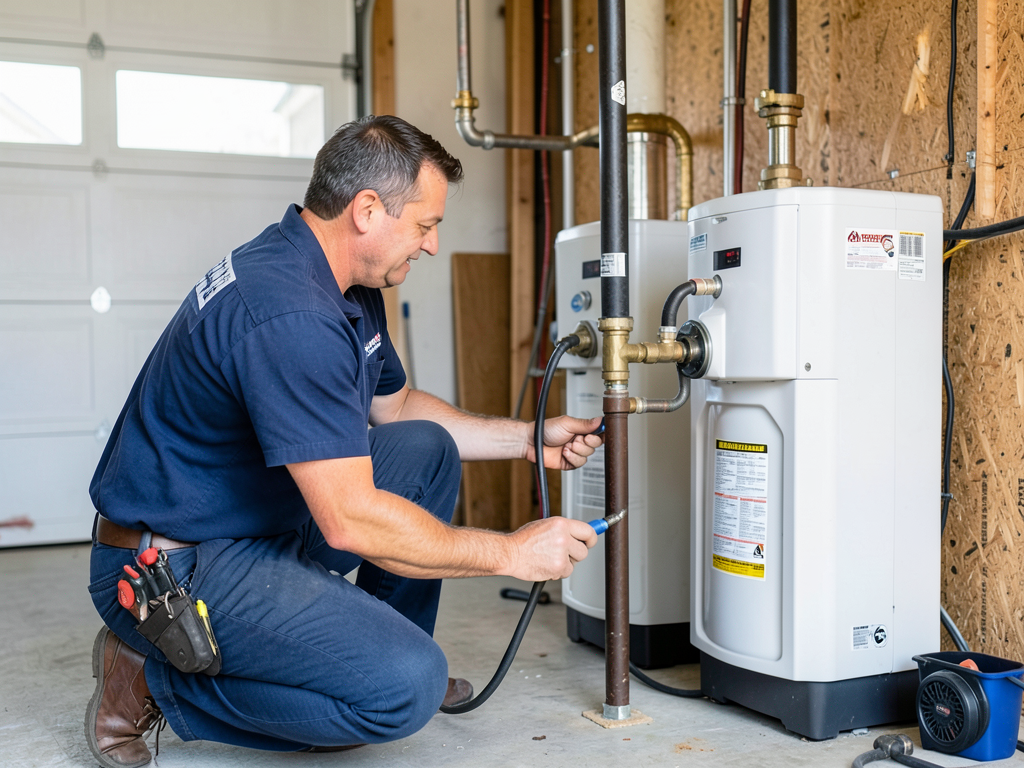
Whole Home Water Filtration vs Reverse Osmosis – Finding the Right Fit for Jacksonville Families
Jacksonville families face unique water quality challenges that make choosing the right filtration system critical. Our municipal water from the Floridan Aquifer contains high mineral content and chlorine levels that affect everything from your morning coffee to your shower experience. Understanding the differences between whole home water filtration and reverse osmosis systems will help you make the right choice for your family’s health and budget. How to Get Your Tankless Water Heater Installed at Jacksonville Beach.
The Hard Truth About Jacksonville Water Quality
Jacksonville’s water comes from the Floridan Aquifer and carries a heavy mineral load. JEA reports show our water averages 12-15 grains per gallon of hardness, which is considered very hard. This means calcium and magnesium deposits build up in your pipes, water heater, and appliances. The high chlorine levels used for disinfection also create that distinctive chemical taste many Jacksonville residents notice. JEA Water Quality Report.
Beyond hardness, Jacksonville water can contain sulfur compounds that cause that rotten egg smell in some areas near the St. Johns River. Iron content varies by neighborhood, with parts of Mandarin and Southside seeing higher concentrations. These local variations make a one-size-fits-all approach ineffective. Get Rid of Hard Water for Good with a Water Softener Installation in Ponte Vedra.
Water testing shows Jacksonville’s total dissolved solids (TDS) range from 200-400 parts per million, higher than the national average. This affects everything from soap lathering to the lifespan of your dishwasher. The combination of hardness, chlorine, and occasional sulfur creates a perfect storm for filtration needs.. Read more about Gas vs Electric Water Heaters – Which Energy Source Makes Sense for Your Fleming Island Home?.
How Whole Home Water Filtration Works
Whole home water filtration systems install at your main water line and treat every drop entering your house. These point-of-entry (POE) systems typically use multiple stages including sediment pre-filters, activated carbon filters, and sometimes water softeners. The system processes water before it reaches your faucets, showers, and appliances. Sediment Buildup in Pipes.
Most whole home systems in Jacksonville use 10-20 micron sediment filters followed by activated carbon to remove chlorine and improve taste. Some systems add water softening components that use ion exchange to remove calcium and magnesium. These systems typically handle 10-15 gallons per minute, enough for simultaneous showers and laundry.. Read more about Why Your Brand New Shower Has Weak Pressure and How a Professional Can Fix It.
Installation usually occurs in your garage or near the water heater where the main line enters. The systems require minimal maintenance – typically changing pre-filters every 3-6 months and carbon filters annually. Whole home systems protect your plumbing infrastructure from scale buildup that can reduce water pressure over time. Plumbing Macclenny.
Understanding Reverse Osmosis Systems
Reverse osmosis (RO) systems work differently by filtering water at specific points of use, typically under your kitchen sink. These point-of-use (POU) systems force water through a semi-permeable membrane that removes up to 99% of dissolved solids, contaminants, and minerals. RO systems provide the purest drinking water available for residential use.. Read more about Traditional Tank or Tankless Water Heaters – Which One Actually Saves You More Money in Orange Park?.
RO systems use multiple filtration stages including sediment pre-filters, carbon filters, the RO membrane itself, and a post-carbon filter. The process removes chlorine, lead, fluoride, nitrates, and other contaminants that whole home systems might miss. However, RO systems waste about 3-4 gallons of water for every gallon of purified water produced.
Installation requires a dedicated faucet and drain connection. The system stores purified water in a small tank, typically 3-4 gallons, which means there’s a brief wait when you first turn on the tap. RO systems need more frequent maintenance, with filters changed every 6-12 months and membranes every 2-3 years. The Best Drain Cleaning Companies for Clogged Pipes in San Marco.
Comparing Performance for Jacksonville Homes
Whole home systems excel at protecting your entire plumbing infrastructure. They prevent scale buildup in pipes and appliances, extend water heater life by up to 50%, and eliminate chlorine taste throughout the house. However, they don’t remove dissolved solids as effectively as RO systems and may not address specific contaminants like lead or fluoride.
RO systems provide superior drinking water quality but only at specific outlets. They remove contaminants that whole home systems miss, including heavy metals, pharmaceuticals, and many organic compounds. The trade-off is limited capacity – you won’t have RO-quality water for showers, laundry, or outdoor use.
For Jacksonville’s specific water profile, whole home systems typically reduce chlorine by 80-90% and hardness by 50-70% with water softening. RO systems achieve 95-99% reduction across all contaminants but only for the water you drink and cook with.
Cost Comparison for Jacksonville Families
Initial installation costs vary significantly. Whole home systems range from $1,200 to $3,500 depending on capacity and features. Basic systems with sediment and carbon filters start around $1,200, while comprehensive systems with water softening run $2,500 to $3,500. Installation typically takes 2-4 hours by a licensed plumber.
RO systems cost less upfront, ranging from $300 to $800 for the unit plus $150 to $300 for installation. However, RO systems have higher ongoing costs due to more frequent filter replacements. Annual maintenance for RO systems runs $100 to $200 versus $50 to $100 for whole home systems.
Over five years, whole home systems typically cost $2,000 to $3,500 total including installation and maintenance. RO systems cost $800 to $1,500 for the same period. The choice depends on whether you prioritize whole-house protection or drinking water quality.
| System Type | Initial Cost | Annual Maintenance | Water Waste | Best For |
|---|---|---|---|---|
| Whole Home | $1,200 – $3,500 | $50 – $100 | None | Whole-house protection |
| Reverse Osmosis | $300 – $800 | $100 – $200 | 3-4 gallons waste per gallon | Drinking/cooking water |
Installation Considerations for Jacksonville Homes
Florida Building Code requires licensed plumbers for whole home system installation. The systems must comply with JEA water connection standards and include proper shut-off valves. Most Jacksonville homes have adequate space in garages or utility areas for whole home systems, though some historic homes in Riverside may need creative placement.
RO systems require less invasive installation but need access to a drain line and electrical outlet. The dedicated faucet installation may require drilling through countertops, which can be challenging for granite or quartz surfaces common in newer Jacksonville developments.
Water pressure in Jacksonville typically ranges from 40-80 psi, suitable for most filtration systems. However, homes in areas with older infrastructure like parts of Arlington may have lower pressure that affects system performance. A pressure gauge test helps determine if a booster pump is needed.
Maintenance Requirements by System Type
Whole home systems require minimal hands-on maintenance. Sediment pre-filters catch sand and rust particles and need replacement every 3-6 months. Carbon filters that remove chlorine and improve taste last 6-12 months. Water softening components need salt added every 4-8 weeks depending on usage and water hardness.
RO systems demand more frequent attention. Pre-filters and post-filters need replacement every 6-12 months. The RO membrane, the heart of the system, lasts 2-3 years but requires monitoring for efficiency drops. Many systems include indicators that signal when maintenance is needed.
Jacksonville’s high chlorine levels mean carbon filters in whole home systems may need more frequent replacement than manufacturers suggest. Testing your water annually helps optimize maintenance schedules and ensures your system performs as designed.
Common Water Issues in Jacksonville Neighborhoods
Different Jacksonville neighborhoods face distinct water quality challenges. Areas near the St. Johns River like San Marco and Riverside often experience higher sulfur content, creating that distinctive rotten egg smell. The sulfur issue stems from anaerobic bacteria that thrive in the river’s ecosystem and affect groundwater.
Southside and Mandarin residents typically deal with the highest hardness levels due to the aquifer composition in those areas. Water hardness can reach 20 grains per gallon in some Southside neighborhoods, causing severe scale buildup in appliances and reducing their efficiency by up to 30%.
Arlington and Northside homes often have older galvanized pipes that compound water quality issues. The combination of hard water and aging infrastructure creates a perfect environment for scale and corrosion, making whole home filtration particularly valuable in these areas.
Making the Right Choice for Your Family
Choose whole home filtration if you want to protect your entire plumbing system, eliminate chlorine taste throughout the house, and reduce scale buildup in appliances. This option works best for families concerned about skin irritation from chlorine, appliance longevity, and overall water quality for bathing and cleaning.
Opt for RO if your primary concern is drinking water purity for health reasons, you want to remove specific contaminants like lead or fluoride, or you’re focused on the best possible taste for coffee, tea, and cooking. RO systems make sense for families with young children, health concerns, or anyone who wants premium drinking water.
Many Jacksonville families find that combining both systems provides the best solution – whole home filtration for general use and an RO system for drinking water. This combination addresses all water quality concerns while managing costs effectively.
Professional Installation and Testing
Professional water testing should be your first step. A comprehensive test analyzes hardness, chlorine, pH, iron, sulfur, and total dissolved solids. This data helps determine which system or combination will work best for your specific situation. Testing typically costs $100 to $200 but is often free with system installation.
Installation by a licensed Jacksonville plumber ensures compliance with local codes and proper system sizing. The plumber should calculate your household’s water usage, test your incoming water pressure, and assess your plumbing layout. This professional assessment prevents costly mistakes like undersized systems or improper installation.
Post-installation testing verifies the system works as designed. This quality check ensures you’re getting the water quality improvements you paid for and helps establish a baseline for future maintenance.
Frequently Asked Questions
What’s the main difference between whole home and RO systems?
Whole home systems treat all water entering your house for general use, while RO systems provide ultra-pure water only at specific outlets like your kitchen sink. Whole home systems protect plumbing and appliances; RO systems focus on drinking water quality.
How long do water filtration systems last?
Whole home systems typically last 10-15 years with proper maintenance. RO systems last 5-10 years, though individual components like membranes need replacement every 2-3 years. Regular maintenance significantly extends system life.
Will a water filter improve my water pressure?
Properly sized systems shouldn’t reduce pressure noticeably. However, undersized systems or those with clogged filters can restrict flow. Professional sizing ensures your system handles your household’s peak water demand without pressure loss.
Are water softeners necessary with whole home filtration?
In Jacksonville’s hard water conditions, water softening provides significant benefits. Softened water extends appliance life, improves soap effectiveness, and prevents scale buildup. Many whole home systems include softening components specifically for our local water conditions.
Next Steps for Cleaner Water
Clean, healthy water starts with understanding your specific needs. Jacksonville’s unique water quality challenges require solutions tailored to local conditions. Whether you need whole home protection, drinking water purification, or a combination of both, professional assessment ensures you get the right system for your family.
Don’t wait for scale buildup to damage your appliances or chlorine to affect your family’s comfort. Call (904) 839-7199 today to schedule your free water quality test and consultation. Our licensed plumbers will analyze your water, assess your home’s needs, and recommend the perfect filtration solution for your Jacksonville family.
Pick up the phone and call (904) 839-7199 now. Your family deserves clean, healthy water throughout your entire home. We serve Jacksonville, Orange Park, and Macclenny with expert installation and maintenance services that protect your investment and your family’s health. For more information, visit NSF Water Filter Standards.
You may also find this helpful. The Major Differences Between Well Water and City Water in Clay County and Fruit Cove.
{
“@context”: “https://schema.org”,
“@type”: “BlogPosting”,
“headline”: “Whole Home Water Filtration vs Reverse Osmosis – Finding the Right Fit for Jacksonville Families”,
“description”: “Confused about whole home water filtration vs reverse osmosis? Learn which system works best for Jacksonville’s hard water and chlorine levels. Local expert guide.”,
“wordCount”: 1916,
“datePublished”: “2026-03-08T10:44:00.000Z”,
“dateModified”: “2026-03-08T10:44:00.000Z”,
“inLanguage”: “en-US”,
“mainEntityOfPage”: {
“@type”: “WebPage”,
“@id”: “https://titanplumbingjacksonville.com”
},
“publisher”: {
“@type”: “LocalBusiness”,
“name”: “Titan Plumbing Jacksonville”,
“url”: “https://titanplumbingjacksonville.com”
},
“author”: {
“@type”: “Organization”,
“name”: “Titan Plumbing Jacksonville”,
“url”: “https://titanplumbingjacksonville.com”
},
“image”: {
“@type”: “ImageObject”,
“url”: “https://titanplumbingjacksonville.com/wp-content/uploads/2026/03/whole-home-water-filtration-vs-reverse-osmosis-fin-1.png”
}
}
{
“@context”: “https://schema.org”,
“@type”: “Plumber”,
“name”: “Titan Plumbing Jacksonville”,
“url”: “https://titanplumbingjacksonville.com”,
“address”: {
“@type”: “PostalAddress”,
“addressLocality”: “Jacksonville”
},
“areaServed”: {
“@type”: “City”,
“name”: “Jacksonville”
}
}
{
“@context”: “https://schema.org”,
“@type”: “FAQPage”,
“mainEntity”: [
{
“@type”: “Question”,
“name”: “What’s the main difference between whole home and RO systems?”,
“acceptedAnswer”: {
“@type”: “Answer”,
“text”: “Whole home systems treat all water entering your house for general use, while RO systems provide ultra-pure water only at specific outlets like your kitchen sink. Whole home systems protect plumbing and appliances; RO systems focus on drinking water quality.”
}
},
{
“@type”: “Question”,
“name”: “How long do water filtration systems last?”,
“acceptedAnswer”: {
“@type”: “Answer”,
“text”: “Whole home systems typically last 10-15 years with proper maintenance. RO systems last 5-10 years, though individual components like membranes need replacement every 2-3 years. Regular maintenance significantly extends system life.”
}
},
{
“@type”: “Question”,
“name”: “Will a water filter improve my water pressure?”,
“acceptedAnswer”: {
“@type”: “Answer”,
“text”: “Properly sized systems shouldn’t reduce pressure noticeably. However, undersized systems or those with clogged filters can restrict flow. Professional sizing ensures your system handles your household’s peak water demand without pressure loss.”
}
},
{
“@type”: “Question”,
“name”: “Are water softeners necessary with whole home filtration?”,
“acceptedAnswer”: {
“@type”: “Answer”,
“text”: “In Jacksonville’s hard water conditions, water softening provides significant benefits. Softened water extends appliance life, improves soap effectiveness, and prevents scale buildup. Many whole home systems include softening components specifically for our local water conditions.”
}
}
]
}
{
“@context”: “https://schema.org”,
“@type”: “BreadcrumbList”,
“itemListElement”: [
{
“@type”: “ListItem”,
“position”: 1,
“name”: “Home”,
“item”: “https://titanplumbingjacksonville.com”
},
{
“@type”: “ListItem”,
“position”: 2,
“name”: “Blog”,
“item”: “https://titanplumbingjacksonville.com/blog”
},
{
“@type”: “ListItem”,
“position”: 3,
“name”: “Whole Home Water Filtration vs Reverse Osmosis – Finding the Right Fit for Jacksonville Families”
}
]
}
{
“@context”: “https://schema.org”,
“@type”: “Service”,
“serviceType”: “Plumbing”,
“provider”: {
“@type”: “LocalBusiness”,
“name”: “Titan Plumbing Jacksonville”,
“url”: “https://titanplumbingjacksonville.com”
},
“areaServed”: {
“@type”: “City”,
“name”: “Jacksonville”
},
“description”: “Confused about whole home water filtration vs reverse osmosis? Learn which system works best for Jacksonville’s hard water and chlorine levels. Local expert guide.”
}