
Specialized Plumbing for Medical Suites in Jacksonville’s Southside
Medical facilities in Jacksonville’s Southside area require specialized plumbing systems that go far beyond standard commercial installations. Healthcare environments must meet strict AHCA (Agency for Health Care Administration) regulations, infection control protocols, and 24/7 operational demands that protect patient safety while maintaining business continuity. AHCA Florida Healthcare Regulations.
The Southside medical corridor, stretching from St. Johns Town Center to Baptist Health facilities, has seen rapid expansion of dental offices, surgical centers, and outpatient clinics. Each facility type presents unique plumbing challenges that demand expertise in medical gas systems, backflow prevention, and sterile water delivery. How to Get Your Tankless Water Heater Installed at Jacksonville Beach.
Medical Gas Piping Systems for Healthcare Facilities
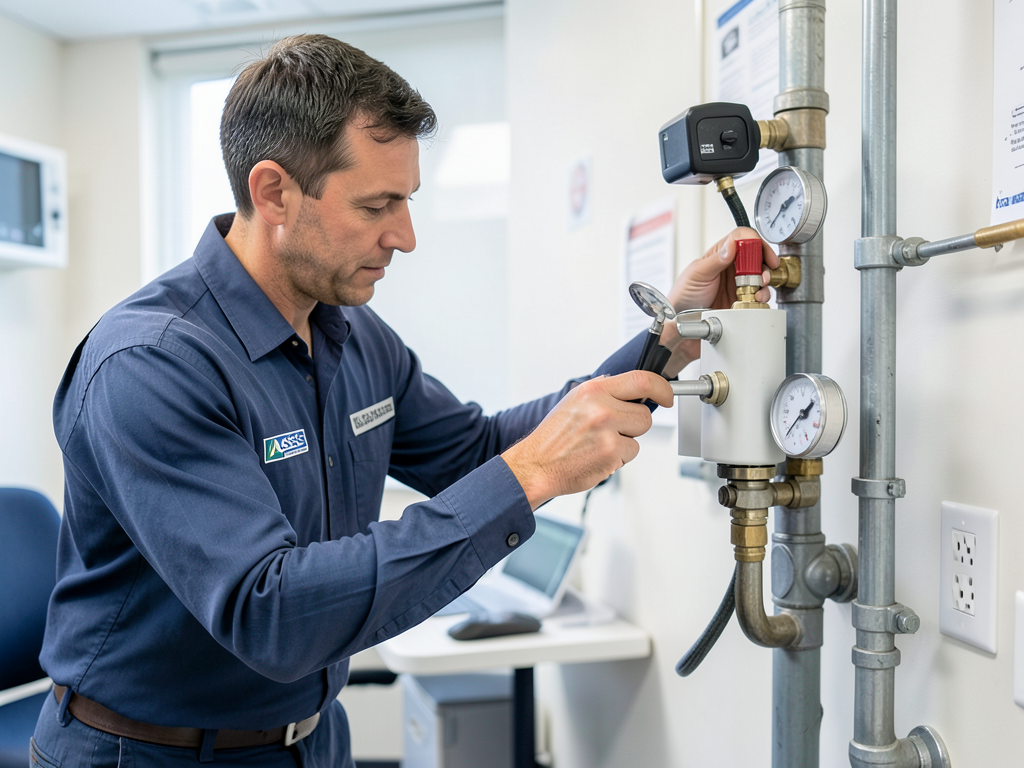
Medical gas piping represents one of the most critical specialized systems in any healthcare facility. Unlike standard compressed air systems, medical gases include oxygen, nitrous oxide, medical air, and vacuum systems that require ASSE 6010 certification and NFPA 99 compliance. NFPA 99 Medical Gas Standards.
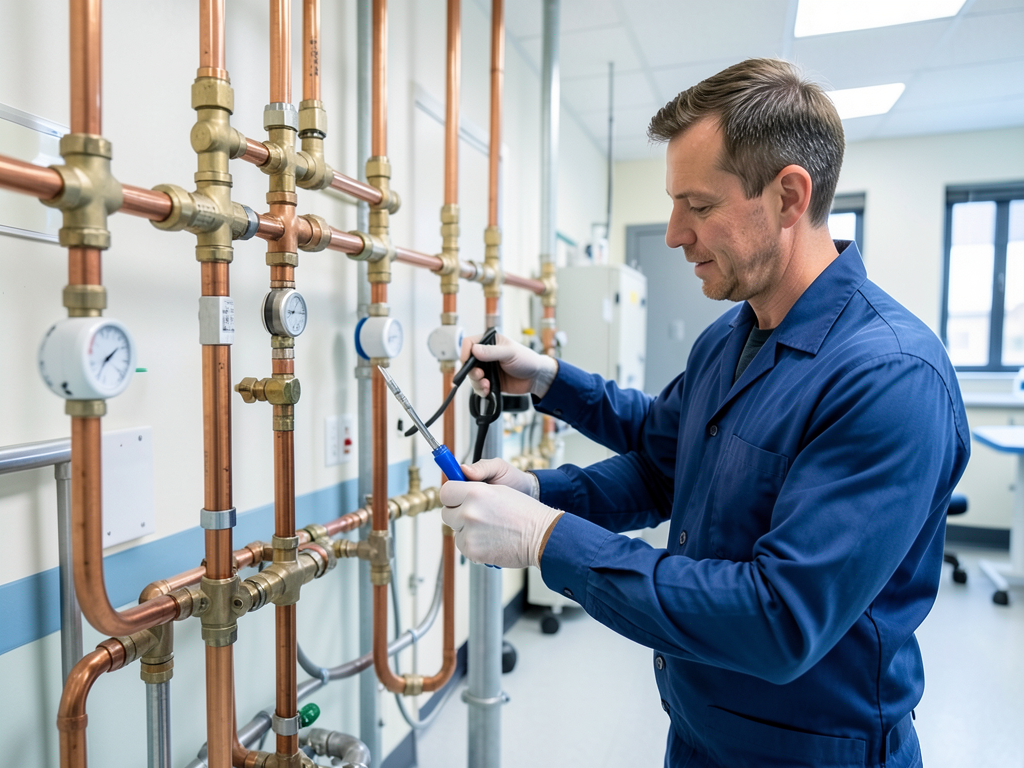
Installation requires oxygen-cleaned copper or stainless steel piping with specialized fittings that prevent contamination. Each outlet must be clearly labeled with gas type, flow rate, and pressure specifications. Testing protocols include helium leak detection at 1.5 times working pressure and verification of oxygen concentration levels. Quick Slab Leak Detection and Repair for Homeowners in Southside.
Medical gas systems in Southside facilities often integrate with emergency power systems to maintain operation during JEA grid outages. This redundancy proves essential for surgical centers and dental offices performing sedation procedures.
Backflow Prevention for Healthcare Water Systems
Healthcare facilities face unique backflow risks from chemical disinfectants, laboratory solutions, and medical equipment connections. Florida Building Code Section 5 requires reduced pressure principle assemblies (RPZ) for all medical facility water service connections. Get Rid of Hard Water for Good with a Water Softener Installation in Ponte Vedra.
Annual testing by ASSE 5110 certified technicians ensures these devices maintain proper pressure differentials. Southside medical buildings near JEA water mains must also consider water hammer effects from nearby construction or fire suppression system testing.
Isolation valves allow individual departments to maintain operation while others undergo testing or maintenance. This capability proves crucial for multi-tenant medical buildings where one tenant’s plumbing work cannot disrupt adjacent healthcare providers.
Hands-Free Surgical Scrub Sinks and Infection Control
Surgical scrub stations require specialized plumbing that eliminates cross-contamination points. Foot pedals, infrared sensors, or elbow-operated controls prevent healthcare workers from touching contaminated surfaces after washing hands.
Water delivery systems must provide consistent temperature between 95-105°F with anti-scald protection. Flow rates typically range from 2-4 gallons per minute to ensure adequate rinsing while conserving water. Many Southside facilities now incorporate laminar flow devices that prevent air entrainment and bacterial growth.
Drain systems for scrub sinks require trap primers to maintain water seals and prevent sewer gas infiltration. Floor drains must slope toward central collection points with appropriate traps to handle chemical spills or overflow situations. The Best Drain Cleaning Companies for Clogged Pipes in San Marco.
ADA-Compliant Medical Restroom Installation
Medical facility restrooms must exceed standard ADA requirements due to higher patient mobility needs. Door clearances require 32-inch minimum openings with lever-style hardware that patients can operate with limited hand strength.
Toilet installations need reinforced walls behind fixtures to support grab bars at 33-36 inches height. Sinks must provide knee clearance of at least 27 inches while maintaining proper drain trap seal protection from floor drains. Running Toilet Repair.
Many Southside medical suites now incorporate automatic flush valves and touchless soap dispensers to reduce cross-contamination. Water pressure must maintain 40-80 PSI to ensure proper operation of these electronic fixtures during peak usage periods.
Laboratory Acid Waste Drainage Systems
Laboratory spaces in medical facilities require specialized acid waste systems that handle corrosive chemicals from pathology labs, dental offices, and research facilities. These systems use chemical-resistant materials like CPVC, polypropylene, or glass piping rated for specific pH levels.
Drainage must incorporate neutralization tanks before connecting to JEA sanitary sewer systems. These tanks use limestone chips or chemical neutralizers to adjust pH levels within acceptable ranges before discharge.
Ventilation systems prevent hydrogen sulfide buildup in acid waste piping. Individual lab spaces require isolation valves to prevent cross-contamination between different chemical processes or research projects.
Legionella Prevention and Water Management Plans
Healthcare facilities must implement comprehensive water management plans to prevent Legionella growth. Florida Administrative Code Chapter 64E-6 requires documented temperature monitoring, flushing protocols, and biofilm prevention strategies.
Hot water systems maintain storage temperatures above 140°F with distribution temperatures exceeding 120°F at all outlets. Thermostatic mixing valves ensure safe delivery temperatures while preventing bacterial growth in distribution piping.
Many Southside medical buildings incorporate point-of-use filtration systems with 0.2-micron filters at high-risk areas like transplant units or neonatal care. Regular testing includes culturing water samples from multiple locations to verify system effectiveness.
Emergency Shut-off Valve Mapping for Clinics
Medical facilities require detailed emergency shut-off valve mapping for rapid response to water leaks or contamination events. Each valve must be clearly labeled with its function and location relative to critical medical equipment.
Isolation zones allow selective shutdown without affecting entire building operations. Dental offices can maintain suction systems while shutting off water to sterilization equipment during emergency repairs.
Valve accessibility proves crucial during after-hours emergencies when maintenance staff may not be immediately available. Clear signage and staff training ensure proper response during water-related incidents.
Jacksonville Utility (JEA) Commercial Requirements
JEA commercial water service connections require specific sizing based on facility type and expected demand. Medical facilities typically need 2-inch minimum service lines with backflow preventers installed immediately after the water meter.
Fire suppression systems in medical buildings require separate water service connections with dedicated backflow prevention. JEA mandates annual testing documentation and immediate repair of any device failures.
Sanitary sewer connections must handle both normal waste flow and potential chemical discharge from laboratory spaces. Many Southside medical buildings require grease interceptors for cafeteria facilities or break rooms.
Specialized Medical Equipment Plumbing Connections
Dental vacuum systems require dedicated plumbing with proper venting to prevent cross-contamination between patient treatment rooms. These systems use water-jacketed pumps that need continuous cooling water supply and proper drainage.
Autoclave installations need both water supply and drain connections with temperature-resistant materials. Steam exhaust requires proper venting to prevent moisture damage to surrounding building materials.
Medical imaging equipment often requires deionized water systems for cooling and operation. These systems need regular maintenance to prevent mineral buildup that could damage sensitive electronic components.
Water Filtration and Sterilization Systems
Medical facilities require advanced water filtration beyond standard commercial systems. Reverse osmosis units provide deionized water for laboratories, while UV sterilization systems eliminate bacteria in critical care areas.
Filter replacement schedules follow strict protocols based on water quality testing results. Many Southside facilities near JEA water mains experience sediment issues that require pre-filtration stages to protect downstream equipment.
Monitoring systems track filter performance and water quality parameters. Alarms notify facility managers of pressure drops or quality deviations that could indicate system failures or contamination events.
Emergency Response Planning for Healthcare Plumbing
Medical facilities need comprehensive emergency response plans for plumbing failures that could disrupt patient care. These plans include backup water supply options, temporary plumbing connections, and rapid repair protocols.
24/7 emergency response capability proves essential for maintaining operations during nights, weekends, and holidays. Many Southside medical buildings cannot afford extended downtime due to patient appointment scheduling and regulatory compliance requirements.
Preventive maintenance programs identify potential failures before they impact operations. Regular inspections of critical systems prevent unexpected breakdowns during peak patient volumes or emergency situations.
Compliance with Florida Building Code Healthcare Standards
Florida Building Code Section 553 establishes specific requirements for healthcare facility construction and renovation. These standards address everything from plumbing fixture counts to emergency power system integration.. Read more about What Every Jacksonville Condo Owner Should Know About Shared Plumbing Stacks.
AHCA licensing requires documented compliance with all applicable codes and standards. Regular inspections verify ongoing compliance and identify needed upgrades or repairs.
Many Southside medical buildings constructed before 2010 require updates to meet current code requirements. These upgrades often include replacing older copper piping with more durable materials or upgrading backflow prevention systems.
Cost Factors for Medical Office Plumbing Projects
Medical plumbing projects typically cost 40-60% more than standard commercial installations due to specialized materials, certification requirements, and testing protocols. Medical gas piping alone can add $15-25 per square foot to construction budgets.
Permit fees for healthcare facilities often exceed those for standard commercial buildings due to additional inspection requirements. JEA connection fees vary based on service size and facility type.
Maintenance costs for medical plumbing systems run higher than standard commercial buildings due to more frequent testing requirements and specialized repair needs. Annual testing of backflow preventers and medical gas systems represents a significant ongoing expense.
Choosing a Medical Office Plumbing Contractor
Healthcare facility managers should verify ASSE certifications, including 6010 for medical gas and 5110 for backflow prevention. Experience with AHCA inspections and JEA commercial requirements proves essential for successful project completion.
24/7 emergency response capability ensures minimal disruption during unexpected failures. Rapid response times prevent patient appointment cancellations and maintain regulatory compliance.
Documentation capabilities prove crucial for healthcare environments. Contractors must provide detailed testing records, material certifications, and compliance documentation for AHCA inspections and insurance requirements.
Frequently Asked Questions
What certifications should a medical office plumber have?
Medical office plumbers need ASSE 6010 certification for medical gas systems, ASSE 5110 for backflow prevention testing, and familiarity with AHCA regulations and Florida Building Code healthcare standards.
How often do medical gas systems need testing?
Medical gas systems require annual testing per NFPA 99 standards, including pressure testing, leak detection, and verification of outlet functionality. Some facilities require more frequent testing based on usage patterns.
What makes medical office plumbing more expensive than standard commercial?
Medical plumbing costs more due to specialized materials, certification requirements, more frequent testing, and the need for 24/7 emergency response capability to maintain patient care operations.
Do all medical offices need medical gas piping?
Not all medical offices require medical gas systems. Dental offices, surgical centers, and facilities performing sedation typically need medical gas piping, while general practitioner offices may only need standard plumbing.
How do I verify a plumber’s healthcare experience?
Ask for ASSE certification numbers, request references from other medical facilities, verify familiarity with AHCA requirements, and confirm 24/7 emergency response capability before hiring.
You may also find this helpful. Making Your San Marco Small Business Bathroom ADA Compliant.
{
“@context”: “https://schema.org”,
“@type”: “BlogPosting”,
“headline”: “Specialized Plumbing Needs for New Medical Suites in the Southside Area”,
“description”: “Medical office plumbing in Jacksonville requires AHCA compliance, medical gas piping, and infection control systems. Learn specialized healthcare plumbing solutions.”,
“wordCount”: 1712,
“datePublished”: “2026-05-21T12:52:00.000Z”,
“dateModified”: “2026-05-21T12:52:00.000Z”,
“inLanguage”: “en-US”,
“mainEntityOfPage”: {
“@type”: “WebPage”,
“@id”: “https://titanplumbingjacksonville.com”
},
“publisher”: {
“@type”: “LocalBusiness”,
“name”: “Titan Plumbing Jacksonville”,
“url”: “https://titanplumbingjacksonville.com”
},
“author”: {
“@type”: “Organization”,
“name”: “Titan Plumbing Jacksonville”,
“url”: “https://titanplumbingjacksonville.com”
},
“image”: {
“@type”: “ImageObject”,
“url”: “https://titanplumbingjacksonville.com/wp-content/uploads/2026/03/specialized-plumbing-needs-for-new-medical-suites-1.png”
}
}
{
“@context”: “https://schema.org”,
“@type”: “Plumber”,
“name”: “Titan Plumbing Jacksonville”,
“url”: “https://titanplumbingjacksonville.com”,
“address”: {
“@type”: “PostalAddress”,
“addressLocality”: “Jacksonville”
},
“areaServed”: {
“@type”: “City”,
“name”: “Jacksonville”
}
}
{
“@context”: “https://schema.org”,
“@type”: “FAQPage”,
“mainEntity”: [
{
“@type”: “Question”,
“name”: “What certifications should a medical office plumber have?”,
“acceptedAnswer”: {
“@type”: “Answer”,
“text”: “Medical office plumbers need ASSE 6010 certification for medical gas systems, ASSE 5110 for backflow prevention testing, and familiarity with AHCA regulations and Florida Building Code healthcare standards.”
}
},
{
“@type”: “Question”,
“name”: “How often do medical gas systems need testing?”,
“acceptedAnswer”: {
“@type”: “Answer”,
“text”: “Medical gas systems require annual testing per NFPA 99 standards, including pressure testing, leak detection, and verification of outlet functionality. Some facilities require more frequent testing based on usage patterns.”
}
},
{
“@type”: “Question”,
“name”: “What makes medical office plumbing more expensive than standard commercial?”,
“acceptedAnswer”: {
“@type”: “Answer”,
“text”: “Medical plumbing costs more due to specialized materials, certification requirements, more frequent testing, and the need for 24/7 emergency response capability to maintain patient care operations.”
}
},
{
“@type”: “Question”,
“name”: “Do all medical offices need medical gas piping?”,
“acceptedAnswer”: {
“@type”: “Answer”,
“text”: “Not all medical offices require medical gas systems. Dental offices, surgical centers, and facilities performing sedation typically need medical gas piping, while general practitioner offices may only need standard plumbing.”
}
},
{
“@type”: “Question”,
“name”: “How do I verify a plumber’s healthcare experience?”,
“acceptedAnswer”: {
“@type”: “Answer”,
“text”: “Ask for ASSE certification numbers, request references from other medical facilities, verify familiarity with AHCA requirements, and confirm 24/7 emergency response capability before hiring.”
}
}
]
}
{
“@context”: “https://schema.org”,
“@type”: “BreadcrumbList”,
“itemListElement”: [
{
“@type”: “ListItem”,
“position”: 1,
“name”: “Home”,
“item”: “https://titanplumbingjacksonville.com”
},
{
“@type”: “ListItem”,
“position”: 2,
“name”: “Blog”,
“item”: “https://titanplumbingjacksonville.com/blog”
},
{
“@type”: “ListItem”,
“position”: 3,
“name”: “Specialized Plumbing Needs for New Medical Suites in the Southside Area”
}
]
}
{
“@context”: “https://schema.org”,
“@type”: “Service”,
“serviceType”: “Plumbing”,
“provider”: {
“@type”: “LocalBusiness”,
“name”: “Titan Plumbing Jacksonville”,
“url”: “https://titanplumbingjacksonville.com”
},
“areaServed”: {
“@type”: “City”,
“name”: “Jacksonville”
},
“description”: “Medical office plumbing in Jacksonville requires AHCA compliance, medical gas piping, and infection control systems. Learn specialized healthcare plumbing solutions.”
}