
Should You Install Your Tankless Water Heater Inside or Outside Your Jax Beach Home?
Choosing between an indoor and outdoor tankless water heater for your Jacksonville Beach home depends on several factors including local climate, available space, and installation costs. In Northeast Florida’s humid coastal environment, both options have distinct advantages and challenges that affect long-term performance and maintenance. Florida Building Code.
Outdoor units save interior space and typically cost less to install since they don’t require venting through walls or roofs. However, Jacksonville’s occasional winter cold snaps and constant salt air exposure create unique challenges for exterior installations. Indoor units offer better protection from the elements but require proper venting and take up valuable utility space.. Read more about How to Safely Thaw an Outdoor Pipe During a Rare Jacksonville Freeze.
Before making your decision, consider how Jacksonville’s specific conditions affect each type. The area’s high humidity accelerates corrosion on outdoor units, while hard water from JEA’s municipal supply creates scale buildup that affects both indoor and outdoor models. Understanding these local factors helps you choose the option that delivers the best performance and longevity for your home. How to Get Your Tankless Water Heater Installed at Jacksonville Beach.
Quick Comparison: Indoor vs Outdoor Tankless Water Heaters
| Factor | Indoor Installation | Outdoor Installation |
|---|---|---|
| Initial Cost | $1,500-$2,500 | $1,200-$2,000 |
| Venting Required | Yes (direct vent or power vent) | No |
| Space Required | 16-20 square feet | None (wall-mounted) |
| Climate Protection | Full protection | Needs freeze protection kit |
| Maintenance Frequency | Annual flushing | Semi-annual cleaning |
| Lifespan in Jax Beach | 15-20 years | 12-18 years |
Indoor Tankless Water Heaters: Pros and Cons for Jacksonville Homes
Indoor tankless water heaters offer superior protection from Jacksonville’s coastal environment. The constant salt air and high humidity that accelerate corrosion on outdoor units have minimal impact when the equipment is installed inside your home’s conditioned space. Get Rid of Hard Water for Good with a Water Softener Installation in Ponte Vedra.
Installation typically requires mounting the unit on a wall in your garage, utility closet, or attic. The most common setup uses direct vent technology, where combustion air is drawn from outside through a sealed pipe while exhaust exits through a separate pipe. This sealed system prevents backdrafting and keeps combustion byproducts completely separate from your living space. EPA WaterSense Program.
The venting process adds complexity and cost to indoor installations. For typical Jacksonville homes, installers must cut through exterior walls or route vents through the roof. This work requires permits under the Florida Building Code Section 425, which governs water heater installations in Duval County.. Read more about Are Solar Water Heaters Still a Good Investment for Northeast Florida Homeowners?.
Indoor units perform exceptionally well in Jacksonville’s climate since they operate at stable temperatures year-round. The consistent environment helps maintain efficiency and prevents the thermal stress that outdoor units experience during temperature swings. However, indoor installations require adequate combustion air supply and proper clearances from flammable materials.
Space considerations matter significantly for indoor units. A typical 9.8 GPM tankless water heater measures approximately 18 inches tall by 10 inches wide by 26 inches deep. You’ll need to dedicate this wall space plus clearance for maintenance access. Many Jacksonville homeowners with slab foundations find this space constraint challenging since interior walls are often load-bearing.
Hard water from JEA’s supply system affects indoor units just as much as outdoor ones. Jacksonville’s water contains approximately 12-15 grains per gallon of hardness, leading to scale buildup that reduces efficiency over time. Indoor units require annual descaling to maintain performance, a process that involves circulating a descaling solution through the heat exchanger. Sediment Buildup in Pipes.
Outdoor Tankless Water Heaters: Pros and Cons for Coastal Properties
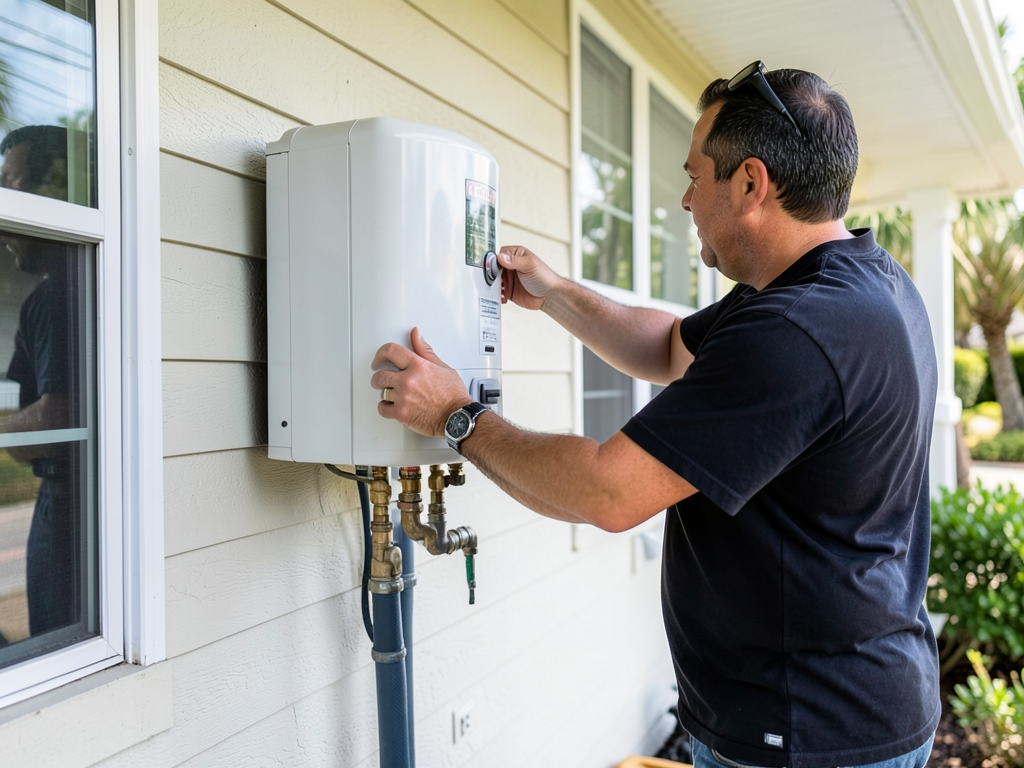
Outdoor tankless water heaters eliminate interior space requirements and avoid the cost and complexity of venting systems. For Jacksonville Beach homes where garage or utility space is limited, mounting the unit on an exterior wall provides a practical solution that keeps valuable interior square footage available.
The primary advantage of outdoor installation is the simplified setup. Without venting requirements, installation typically takes 2-3 hours versus 4-6 hours for indoor units. This reduced labor time translates to lower upfront costs, with outdoor installations averaging $300-$500 less than comparable indoor setups.
However, Jacksonville’s coastal environment creates specific challenges for outdoor units. The constant salt air exposure accelerates corrosion on metal components, particularly the heat exchanger and burner assembly. Manufacturers typically rate outdoor units for 12-15 years in coastal areas versus 15-20 years for indoor installations.
Freeze protection becomes critical during Jacksonville’s occasional winter cold snaps. While rare, temperatures below freezing occur 2-3 nights per year on average. Quality outdoor units include built-in freeze protection that activates electric heating elements when temperatures approach freezing. This feature consumes minimal power but prevents catastrophic damage to the unit.
Humidity presents another challenge for outdoor installations. Jacksonville’s average relative humidity exceeds 75% throughout the year, creating condensation issues that can affect electrical components. Units installed on north-facing walls experience less direct sun exposure but may have longer drying times after rain events.
Outdoor units require more frequent maintenance in coastal areas. The salt air deposits corrosive minerals on heat exchangers and burners, reducing efficiency by 10-15% over five years without proper cleaning. Professional maintenance every six months helps maintain performance and extends equipment life. The Best Drain Cleaning Companies for Clogged Pipes in San Marco.
Installation location matters significantly for outdoor units. South-facing walls receive direct sun exposure that can increase internal temperatures by 20-30 degrees during summer months. This heat stress reduces efficiency and may trigger high-limit switches during peak demand periods. North or east-facing walls provide better thermal management.
Jacksonville-Specific Considerations for Tankless Water Heater Installation
Jacksonville’s unique climate and building characteristics create specific requirements for tankless water heater installations. The area’s high humidity, salt air exposure, and occasional cold weather demand equipment choices and installation practices that differ from inland regions.
Hard water from JEA’s supply system affects both indoor and outdoor units equally. The 12-15 grains per gallon hardness level causes scale buildup that reduces heat exchanger efficiency by up to 30% within five years without treatment. Installing a whole-house water softener extends equipment life and maintains efficiency, particularly important for tankless systems where scale directly impacts performance.
Building codes in Duval County require specific installation practices for both indoor and outdoor units. The Florida Building Code Section 425 mandates minimum clearances from windows, doors, and property lines for outdoor installations. Indoor units must comply with combustion air requirements and venting specifications that vary based on the unit’s BTU rating and installation location.
Jacksonville’s hurricane vulnerability affects outdoor unit selection. Units installed within 5 miles of the coast should have corrosion-resistant heat exchangers rated for coastal environments. Look for units with copper-nickel or stainless steel heat exchangers rather than standard copper, as these materials resist salt air corrosion significantly better.
Energy efficiency ratings matter more in Jacksonville’s climate than in cooler regions. Tankless units with Uniform Energy Factor (UEF) ratings above 0.90 minimize the impact of hard water scale buildup and maintain efficiency longer. The higher upfront cost typically pays for itself through reduced energy consumption over the unit’s lifetime.
Local utility rates influence the cost-effectiveness of different fuel types. JEA’s electric rates average 12-14 cents per kilowatt-hour, while natural gas costs approximately $1.50 per therm. Electric tankless units work well for point-of-use applications but may struggle to meet whole-house demand during simultaneous high-use periods.
Insurance considerations affect installation choices in flood-prone areas. Homes in designated flood zones may face restrictions on outdoor unit placement or require elevated mounting platforms. Check with your insurance provider about coverage implications before finalizing installation plans.
Cost Breakdown: Installation and Operation in Jacksonville Market
Installation costs in Jacksonville vary based on several factors including unit location, fuel type, and installation complexity. Understanding these cost components helps you budget appropriately and compare quotes from different contractors.
Basic outdoor tankless water heater installation in Jacksonville typically ranges from $1,200 to $2,000. This includes the unit, basic mounting hardware, gas line connection (if applicable), and electrical connections. Complex installations requiring new gas lines or electrical circuits can push costs to $2,500 or higher.
Indoor installations cost more due to venting requirements and interior finishing work. A typical indoor installation ranges from $1,500 to $2,500, with high-end direct vent systems reaching $3,000 or more. The additional cost covers vent pipe, roof or wall penetrations, and interior wall repair work.
Operating costs depend on your home’s hot water usage patterns and local utility rates. A family of four using 80-100 gallons of hot water daily can expect annual operating costs of $200-$400 for natural gas units and $400-$600 for electric units, based on current JEA rates.
Maintenance costs vary significantly between installation types. Outdoor units require professional cleaning every six months at $100-$150 per visit to remove salt air deposits and check corrosion protection systems. Indoor units need annual descaling at $150-$200, plus occasional vent inspection and cleaning.
Long-term cost considerations include equipment longevity and replacement timing. Outdoor units in coastal areas typically last 12-15 years, while indoor units often reach 15-20 years with proper maintenance. The shorter lifespan of outdoor units may offset their lower initial installation costs over time.
Permit costs add $50-$150 to most installations in Duval County. The permit process ensures compliance with local building codes and includes inspection of the completed work. Some contractors include permit costs in their quotes, while others list them separately.
Maintenance Requirements for Jacksonville Tankless Water Heaters
Proper maintenance extends equipment life and maintains efficiency for both indoor and outdoor tankless water heaters. Jacksonville’s specific water quality and climate conditions create maintenance requirements that differ from other regions.
Hard water scale buildup represents the primary maintenance challenge for tankless units in Jacksonville. The 12-15 grains per gallon hardness level causes calcium and magnesium deposits to accumulate on heat exchanger surfaces. Without treatment, these deposits reduce heat transfer efficiency by 25-30% within three years.
Annual descaling removes scale buildup and restores efficiency. The process involves circulating a food-grade acidic solution through the heat exchanger for 45-60 minutes. Homeowners can perform this maintenance with DIY kits costing $30-$50, or hire professionals for $150-$200 who also inspect for other issues.
Outdoor units require additional maintenance due to salt air exposure. Every six months, technicians should clean the heat exchanger fins with a soft brush and check for corrosion on electrical connections and gas lines. The freeze protection system also needs testing before winter to ensure proper operation during cold snaps.
Air filter maintenance affects both indoor and outdoor units. Most tankless water heaters include inlet air filters that trap dust and debris. These filters should be cleaned or replaced every three months in Jacksonville’s dusty environment to maintain proper airflow and combustion efficiency.
Vent systems on indoor units require annual inspection for blockages, corrosion, or animal nests. Jacksonville’s bird population often builds nests in exterior vent caps during spring, creating dangerous backdraft conditions. Professional inspection includes checking vent integrity and ensuring proper draft throughout the system.
Gas pressure testing ensures safe operation for natural gas units. Over time, gas pressure can drift outside optimal ranges, affecting combustion efficiency and potentially creating safety hazards. Annual pressure testing by qualified technicians maintains safe operation and optimal performance.
Electronic component inspection helps prevent unexpected failures. Tankless units contain multiple sensors, control boards, and safety switches that can fail due to age or environmental factors. Professional inspection identifies potential failures before they cause system shutdowns or safety issues.
Water quality testing helps determine descaling frequency. Homes with particularly hard water may need biannual descaling instead of annual service. Simple test strips available at hardware stores help monitor hardness levels and schedule appropriate maintenance intervals.
Frequently Asked Questions
Can an outdoor tankless water heater freeze in Jacksonville?
Yes, outdoor units can freeze during Jacksonville’s occasional cold snaps when temperatures drop below 32掳F. Quality outdoor units include freeze protection that activates electric heating elements when temperatures approach freezing. However, extended power outages during cold weather can still cause freeze damage. Installing the unit on a south-facing wall and adding insulation around water lines provides additional protection.
Do I need a permit for tankless water heater installation in Duval County?
Yes, Duval County requires permits for all tankless water heater installations under Florida Building Code Section 425. The permit ensures proper venting, combustion air supply, and compliance with local safety requirements. Permit costs range from $50-$150 and include inspection of the completed installation. Working with licensed contractors who handle permitting simplifies the process.
How does Jacksonville’s humidity affect outdoor tankless water heaters?
Jacksonville’s high humidity accelerates corrosion on outdoor units, particularly on electrical connections and metal components. Units installed within 5 miles of the coast experience the most severe effects. Regular maintenance every six months includes cleaning salt deposits and checking for corrosion. Installing units on north-facing walls reduces direct sun exposure and helps prevent overheating during humid summer months.
What size tankless water heater do I need for my Jacksonville home?
Size requirements depend on your household’s simultaneous hot water needs and the groundwater temperature in your area. Jacksonville’s average groundwater temperature of 70掳F requires different sizing than northern regions. A typical family of four needs a unit rated for 8-10 gallons per minute (GPM) to handle simultaneous showers, dishwasher, and washing machine operation. Professional sizing considers your specific usage patterns and home layout.
How long do tankless water heaters last in Jacksonville’s climate?
Lifespan varies significantly based on installation location and maintenance. Indoor units typically last 15-20 years with proper maintenance, while outdoor units in coastal areas last 12-15 years due to salt air exposure. Hard water scale buildup and lack of maintenance can reduce these lifespans by 30-40%. Installing water softeners and following recommended maintenance schedules maximizes equipment life regardless of installation type.
Making Your Final Decision
The choice between indoor and outdoor tankless water heater installation ultimately depends on your specific circumstances. Consider your available interior space, budget constraints, and willingness to perform regular maintenance when making your decision.
Outdoor installation works best for homes with limited interior space and budgets that prioritize lower upfront costs. The simplified installation and space savings appeal to many Jacksonville Beach homeowners, especially those with older homes where interior modifications prove challenging or expensive.
Indoor installation provides superior protection from Jacksonville’s coastal environment and typically offers longer equipment life. The higher upfront costs and space requirements pay off through reduced maintenance needs and better long-term reliability. Homes with existing interior utility spaces often find indoor installation the most practical choice.
Regardless of your choice, working with experienced local contractors familiar with Jacksonville’s specific requirements ensures proper installation and optimal performance. Professional installation includes proper permitting, code compliance, and setup for your home’s specific conditions.
Ready to upgrade to a tankless water heater? Call (904) 839-7199 today to schedule your consultation. Our Jacksonville-based team understands the unique challenges of coastal installations and can help you choose the perfect solution for your home. Don’t wait until your old water heater fails – upgrade now and start enjoying endless hot water and lower utility bills.
Pick up the phone and call (904) 839-7199 before the next cold snap hits. Our technicians are standing by to help you make the right choice for your Jacksonville Beach home. We’ll handle everything from permitting to final inspection, ensuring your new tankless water heater provides years of reliable service. Finding a Reliable Water Heater Repair Service in Mandarin Without the Wait.
You may also find this helpful. The Hidden Dangers of Attic Water Heaters for Homeowners in Nocatee.
{
“@context”: “https://schema.org”,
“@type”: “BlogPosting”,
“headline”: “Should You Install Your Tankless Water Heater Inside or Outside Your Jax Beach Home?”,
“description”: “Discover the pros and cons of indoor vs outdoor tankless water heaters for Jacksonville Beach homes. Learn about local climate impacts, building codes, and installation costs.”,
“wordCount”: 2548,
“datePublished”: “2026-06-03T07:14:00.000Z”,
“dateModified”: “2026-06-03T07:14:00.000Z”,
“inLanguage”: “en-US”,
“mainEntityOfPage”: {
“@type”: “WebPage”,
“@id”: “https://titanplumbingjacksonville.com”
},
“publisher”: {
“@type”: “LocalBusiness”,
“name”: “Titan Plumbing Jacksonville”,
“url”: “https://titanplumbingjacksonville.com”
},
“author”: {
“@type”: “Organization”,
“name”: “Titan Plumbing Jacksonville”,
“url”: “https://titanplumbingjacksonville.com”
},
“image”: {
“@type”: “ImageObject”,
“url”: “https://titanplumbingjacksonville.com/wp-content/uploads/2026/03/should-you-install-your-tankless-water-heater-insi-1.png”
}
}
{
“@context”: “https://schema.org”,
“@type”: “Plumber”,
“name”: “Titan Plumbing Jacksonville”,
“url”: “https://titanplumbingjacksonville.com”,
“address”: {
“@type”: “PostalAddress”,
“addressLocality”: “Jacksonville”
},
“areaServed”: {
“@type”: “City”,
“name”: “Jacksonville”
}
}
{
“@context”: “https://schema.org”,
“@type”: “FAQPage”,
“mainEntity”: [
{
“@type”: “Question”,
“name”: “Can an outdoor tankless water heater freeze in Jacksonville?”,
“acceptedAnswer”: {
“@type”: “Answer”,
“text”: “Yes, outdoor units can freeze during Jacksonville’s occasional cold snaps when temperatures drop below 32掳F. Quality outdoor units include freeze protection that activates electric heating elements when temperatures approach freezing. However, extended power outages during cold weather can still cause freeze damage. Installing the unit on a south-facing wall and adding insulation around water lines provides additional protection.”
}
},
{
“@type”: “Question”,
“name”: “Do I need a permit for tankless water heater installation in Duval County?”,
“acceptedAnswer”: {
“@type”: “Answer”,
“text”: “Yes, Duval County requires permits for all tankless water heater installations under Florida Building Code Section 425. The permit ensures proper venting, combustion air supply, and compliance with local safety requirements. Permit costs range from $50-$150 and include inspection of the completed installation. Working with licensed contractors who handle permitting simplifies the process.”
}
},
{
“@type”: “Question”,
“name”: “How does Jacksonville’s humidity affect outdoor tankless water heaters?”,
“acceptedAnswer”: {
“@type”: “Answer”,
“text”: “Jacksonville’s high humidity accelerates corrosion on outdoor units, particularly on electrical connections and metal components. Units installed within 5 miles of the coast experience the most severe effects. Regular maintenance every six months includes cleaning salt deposits and checking for corrosion. Installing units on north-facing walls reduces direct sun exposure and helps prevent overheating during humid summer months.”
}
},
{
“@type”: “Question”,
“name”: “What size tankless water heater do I need for my Jacksonville home?”,
“acceptedAnswer”: {
“@type”: “Answer”,
“text”: “Size requirements depend on your household’s simultaneous hot water needs and the groundwater temperature in your area. Jacksonville’s average groundwater temperature of 70掳F requires different sizing than northern regions. A typical family of four needs a unit rated for 8-10 gallons per minute (GPM) to handle simultaneous showers, dishwasher, and washing machine operation. Professional sizing considers your specific usage patterns and home layout.”
}
},
{
“@type”: “Question”,
“name”: “How long do tankless water heaters last in Jacksonville’s climate?”,
“acceptedAnswer”: {
“@type”: “Answer”,
“text”: “Lifespan varies significantly based on installation location and maintenance. Indoor units typically last 15-20 years with proper maintenance, while outdoor units in coastal areas last 12-15 years due to salt air exposure. Hard water scale buildup and lack of maintenance can reduce these lifespans by 30-40%. Installing water softeners and following recommended maintenance schedules maximizes equipment life regardless of installation type.”
}
}
]
}
{
“@context”: “https://schema.org”,
“@type”: “BreadcrumbList”,
“itemListElement”: [
{
“@type”: “ListItem”,
“position”: 1,
“name”: “Home”,
“item”: “https://titanplumbingjacksonville.com”
},
{
“@type”: “ListItem”,
“position”: 2,
“name”: “Blog”,
“item”: “https://titanplumbingjacksonville.com/blog”
},
{
“@type”: “ListItem”,
“position”: 3,
“name”: “Should You Install Your Tankless Water Heater Inside or Outside Your Jax Beach Home?”
}
]
}
{
“@context”: “https://schema.org”,
“@type”: “Service”,
“serviceType”: “Plumbing”,
“provider”: {
“@type”: “LocalBusiness”,
“name”: “Titan Plumbing Jacksonville”,
“url”: “https://titanplumbingjacksonville.com”
},
“areaServed”: {
“@type”: “City”,
“name”: “Jacksonville”
},
“description”: “Discover the pros and cons of indoor vs outdoor tankless water heaters for Jacksonville Beach homes. Learn about local climate impacts, building codes, and installation costs.”
}