
Salt air is the silent destroyer of plumbing fixtures in Jacksonville’s beachside communities. If you live in Neptune Beach Atlantic Beach or Ponte Vedra your fixtures face a daily chemical assault from ocean breezes that carry microscopic salt particles. These particles settle on metal surfaces and begin an oxidation process that can destroy a standard chrome faucet in just 2-3 years.
The corrosive effect is not just cosmetic. Salt air creates pitting corrosion that weakens metal structures. Once pitting starts it creates tiny crevices where more salt accumulates accelerating the damage. This is why a fixture that looks fine from across the room might fail completely when you try to use it.
The science is straightforward. Sodium chloride from ocean spray reacts with metal surfaces in the presence of moisture and oxygen. This creates an electrochemical reaction that breaks down the metal at the molecular level. In Jacksonville’s humid climate the moisture part of this equation is constant making the corrosion process relentless.
Why Jacksonville Plumbing Corrodes Faster Than Inland Areas
Jacksonville’s unique geography creates perfect conditions for accelerated corrosion. The city sits at a low elevation with prevailing winds coming directly off the Atlantic. These winds carry salt spray inland where it settles on everything from cars to plumbing fixtures.
The St. Johns River estuary system also contributes to the problem. Salt water from the ocean mixes with fresh water creating brackish conditions that are particularly corrosive to certain metals. This mixture can travel miles inland affecting neighborhoods that seem far from the beach. How to Get Your Tankless Water Heater Installed at Jacksonville Beach.
Local humidity levels compound the issue. Jacksonville averages 75% relative humidity year-round. This constant moisture in the air means metal surfaces rarely dry completely providing the perfect environment for salt to stay active on fixture surfaces.
Temperature fluctuations in Northeast Florida also play a role. Hot days followed by cooler nights cause metal to expand and contract creating microscopic cracks in protective finishes. These cracks become entry points for salt and moisture accelerating the corrosion process. Florida Building Code.
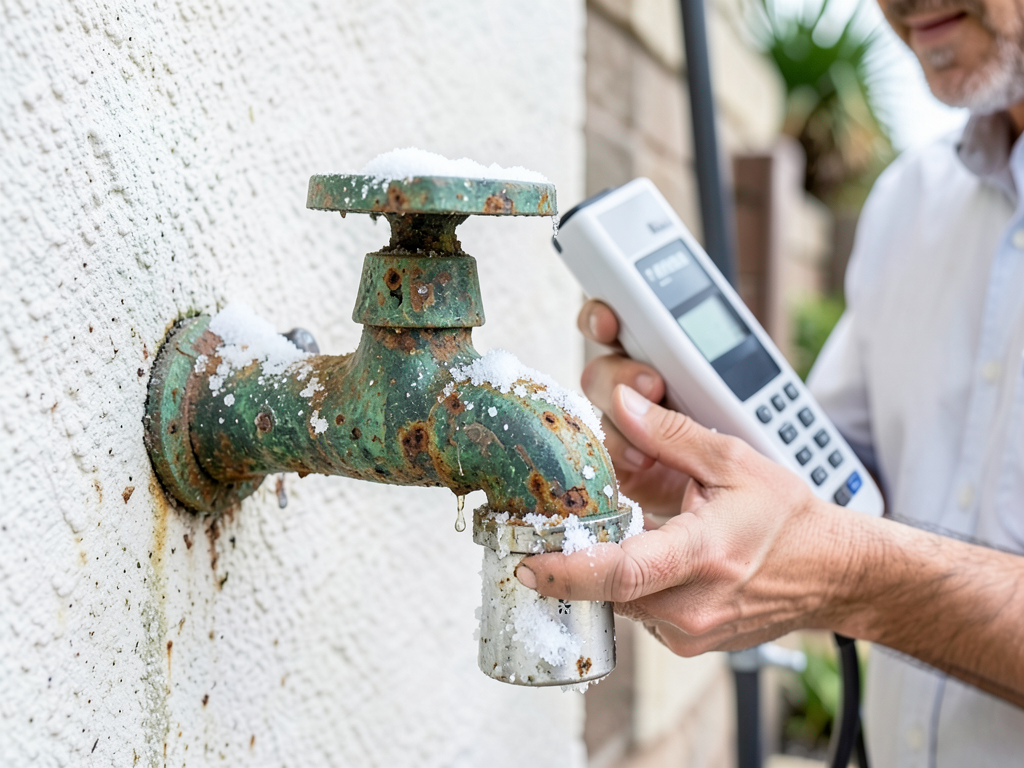
Photo showing severe pitting corrosion on a beachside faucet with green copper oxide buildup and white salt deposits
Identifying the Culprit Green vs White vs Red Rust
Not all corrosion looks the same and the color tells you what you’re dealing with. Green corrosion typically indicates copper or brass fixtures. This verdigris forms when copper oxidizes and is common on older plumbing pipes and some fixture components.
White powdery deposits are usually calcium and magnesium from hard water mixed with salt. This combination creates a scale that traps moisture against metal surfaces. While not as immediately destructive as other forms it creates a perfect environment for corrosion to begin. Get Rid of Hard Water for Good with a Water Softener Installation in Ponte Vedra.
Red rust on steel or iron fixtures indicates advanced corrosion. This happens when the protective coating fails and the base metal begins to oxidize. Red rust spreads quickly once it starts and indicates the fixture is nearing failure. Quick Slab Leak Detection and Repair for Homeowners in Southside.
Black corrosion can appear on certain stainless steel alloys when exposed to high salt environments. This indicates a breakdown of the chromium oxide layer that normally protects stainless steel. Once this layer fails the steel becomes vulnerable to all forms of corrosion.
Understanding these color patterns helps you assess the severity of the problem. Green and white corrosion might be treatable with cleaning and protective coatings. Red rust usually means replacement is necessary within months. The Best Drain Cleaning Companies for Clogged Pipes in San Marco.
The Best Materials for Coastal Homes
Material selection is your first line of defense against salt air corrosion. Not all metals are created equal when it comes to coastal resistance. The right choice can extend fixture life from 2 years to 15+ years.
316-grade stainless steel offers the best corrosion resistance for exposed outdoor fixtures. The molybdenum content in 316 stainless provides superior protection against chloride-induced pitting. This is the same grade used in marine hardware and chemical processing equipment.
Solid brass with PVD (Physical Vapor Deposition) coating represents the gold standard for indoor fixtures. PVD creates a molecular bond with the brass substrate that is 10 times harder than traditional chrome plating. This finish resists scratching and prevents salt from reaching the base metal.
High-quality solid brass without coating will outlast cheap zinc alloys but still requires maintenance. Brass contains copper which provides some natural corrosion resistance but will eventually show green oxidation without protection.
Plastic fixtures eliminate corrosion concerns but introduce other problems. UV exposure makes many plastics brittle and they often fail under temperature extremes. Some homeowners use plastic for outdoor showers but expect to replace them every 5-7 years.
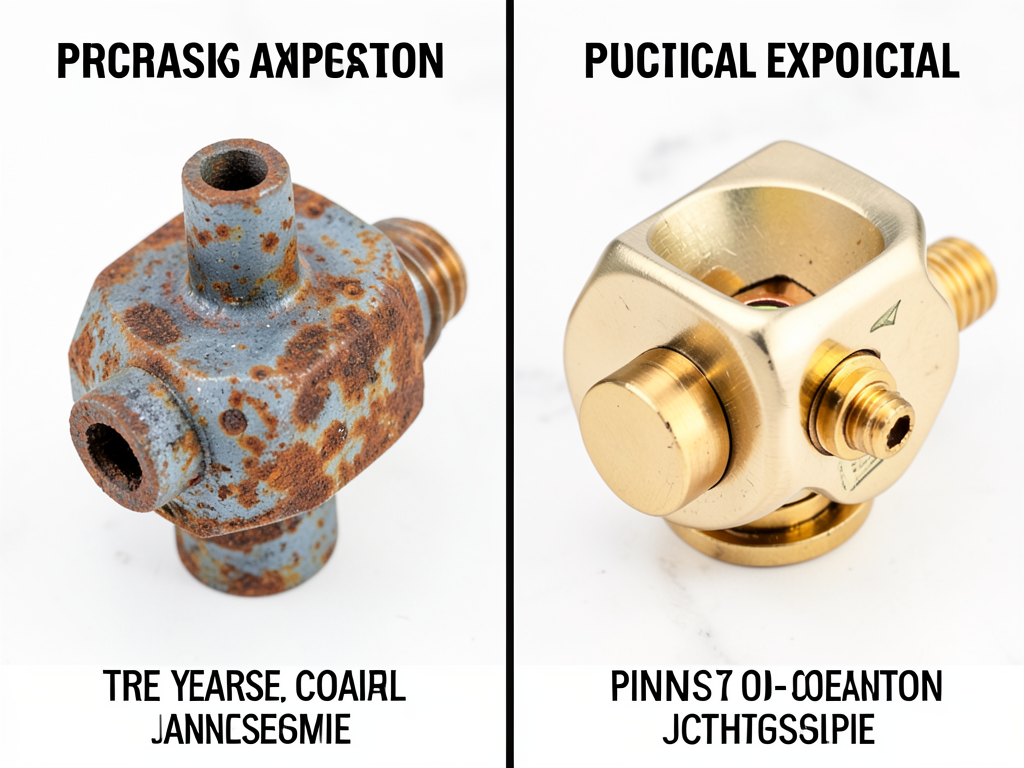
Side-by-side comparison of corroded zinc alloy vs. pristine PVD-coated brass fixtures after 3 years of coastal exposure
Maintenance Checklist for Beachfront Properties
Regular maintenance can double or triple the life of your plumbing fixtures. The key is consistency and using the right techniques. Here’s a schedule that works for Jacksonville beach properties.
Weekly rinsing with fresh water removes salt deposits before they can cause damage. Use a gentle spray nozzle and focus on joints and crevices where salt accumulates. This takes 5 minutes per fixture but prevents months of corrosion.
Monthly deep cleaning with a vinegar solution dissolves mineral deposits. Mix one part white vinegar with three parts water. Apply with a soft cloth never use abrasive pads that can scratch protective finishes. Let the solution sit for 2-3 minutes then rinse thoroughly.. Read more about How to Clean Luxury Matte Black Fixtures Without Damaging the Finish.
Quarterly application of carnauba wax creates a sacrificial barrier against salt. This natural wax repels water and provides a smooth surface that salt cannot grip. Apply a thin coat with a microfiber cloth and buff to a shine. This protection lasts 3-4 months in coastal conditions.
Annual inspection of all fixtures catches problems early. Look for discoloration pitting or rough spots. Check valve operation and replace any fixture showing signs of structural weakness. This inspection takes 30 minutes but can prevent emergency replacements.
Check shut-off valves under sinks twice yearly. Salt air can corrode valve stems making them impossible to turn when you need them. Apply silicone lubricant to valve stems to keep them operating smoothly.
When to Clean vs When to Replace
Not every corroded fixture can be saved. Understanding when to attempt restoration versus replacement saves money and prevents failures. Here’s how to make that decision.
Surface discoloration without pitting usually responds to cleaning. If the metal feels smooth under your fingers and there are no rough spots the fixture likely has intact protective layers underneath. These can often be restored with proper cleaning and waxing.
Pitting corrosion that has penetrated the finish requires immediate replacement. Once salt reaches the base metal the damage accelerates exponentially. Small pits become larger pits and structural integrity is compromised. These fixtures will fail within 6-12 months.
Valve operation failure indicates internal corrosion. If handles become stiff or valves leak when closed the internal components are likely corroded. This affects water control and can lead to flooding if a valve fails completely.
Structural deformation from corrosion means immediate replacement is necessary. If a fixture feels loose has visible cracks or shows signs of metal fatigue it poses a safety hazard. Water pressure can cause these weakened fixtures to fail catastrophically.
Age matters too. Fixtures over 15 years old in coastal environments have likely reached the end of their service life regardless of appearance. Modern materials and coatings offer significantly better protection than products from two decades ago.
The Salt Spray Radius How Far Inland Corrosion Reaches
Salt spray does not respect property lines. In Jacksonville’s coastal areas the corrosive effects extend much farther inland than most homeowners realize. Understanding this radius helps you plan for protection even if you’re not directly on the beach.
Direct salt spray typically reaches 1-2 miles inland under normal conditions. This area experiences the highest corrosion rates with fixtures showing visible damage within 2-3 years of installation. Neptune Beach Atlantic Beach and eastern Jacksonville Beach fall squarely in this zone.. Read more about Should You Install Your Tankless Water Heater Inside or Outside Your Jax Beach Home?.
The secondary zone extends 5-7 miles inland where salt accumulates through deposition and humidity transport. Corrosion here progresses more slowly but still affects fixtures within 5-7 years. Neighborhoods like San Pablo Island and parts of Southside experience these conditions.
Jacksonville’s unique geography creates micro-environments where corrosion extends even farther. Areas near the St. Johns River particularly where it widens near the coast can experience salt effects up to 10 miles inland. The river acts as a salt transport mechanism carrying ocean water into the heart of the city.
Elevation plays a role too. Low-lying areas where salt-laden air settles experience higher corrosion rates than slightly elevated locations. This is why some streets just a few blocks apart show dramatically different fixture lifespans.
Wind patterns matter as well. Areas downwind from the ocean or river mouths receive more salt deposition. Jacksonville’s prevailing southeast winds mean the northeastern parts of the city often experience higher corrosion rates than southwestern areas at the same distance from the coast.
Impact of Water Softeners on Coastal Plumbing Longevity
Water softeners can both help and hurt your plumbing fixtures in coastal environments. Understanding this relationship helps you make informed decisions about water treatment systems.
Traditional ion-exchange water softeners remove calcium and magnesium but replace them with sodium. In coastal areas this adds more salt to your water supply creating a different corrosion challenge. The sodium can accelerate corrosion in some metal pipes and fixtures.
However soft water reduces mineral scale buildup which traps salt against metal surfaces. This means the overall corrosion rate may decrease even with the added sodium. The trade-off depends on your specific water chemistry and fixture materials.
Tankless water heaters benefit significantly from soft water in coastal areas. Scale buildup is a primary cause of tankless heater failure and soft water prevents this. The reduced maintenance and extended heater life often offset any increased corrosion concerns.
Reverse osmosis systems provide the best protection for drinking water fixtures. These remove both hardness minerals and sodium producing water that minimizes all forms of corrosion. However RO systems require significant maintenance and waste water during operation.
Combination systems that soften whole-house water while providing RO for drinking fixtures offer optimal protection. This approach prevents scale in pipes and water heaters while providing corrosion-resistant water for the most vulnerable fixtures.
Professional Solutions for Severe Corrosion Problems
When corrosion becomes severe DIY solutions are no longer sufficient. Professional intervention can address both immediate problems and prevent future damage. Here’s what professional services offer that homeowners cannot match.
Complete fixture replacement with marine-grade materials eliminates the corrosion problem at its source. Professionals can install 316 stainless steel or PVD-coated brass fixtures designed specifically for coastal environments. These premium materials cost more upfront but last 5-10 times longer than standard fixtures.
Protective coating applications go beyond consumer-grade waxes. Professional ceramic coatings create a permanent bond with metal surfaces providing years of salt protection. These coatings are used on boats and offshore equipment where salt resistance is critical.
Galvanic protection systems use sacrificial anodes to protect metal fixtures. Similar to how these protect boat hulls the system directs corrosion to expendable components rather than your expensive fixtures. This technology is particularly effective for outdoor showers and pool equipment.
Water treatment customization addresses the specific challenges of your location. Professional testing can identify whether your primary corrosion threat is salt hardness or other factors. Treatment systems can then be tailored to your exact conditions rather than using one-size-fits-all solutions.
Installation techniques matter as much as materials. Professionals understand how to seal fixtures properly use corrosion-resistant fasteners and create drainage that prevents water accumulation. These details often determine whether a fixture lasts 5 years or 15 years.
Technician installing a marine-grade outdoor shower system with sacrificial anode protection in a Jacksonville beach home
Cost Considerations for Coastal Fixture Upgrades
Investing in corrosion-resistant fixtures requires understanding the cost-benefit relationship. While premium materials cost more upfront they often provide better value over time when replacement costs and inconvenience are factored in.
Standard chrome fixtures cost $50-150 each but typically last 2-3 years in coastal environments. This means replacing them 5-7 times over 15 years for a total cost of $250-1050 plus installation fees.
Marine-grade fixtures cost $200-500 each but last 15-20 years with proper maintenance. The upfront investment is higher but eliminates replacement costs for a decade or more. Over 15 years the total cost often equals or beats the standard fixture option.
Installation costs vary significantly based on fixture complexity. Simple faucet replacements might cost $100-200 while shower system upgrades can run $500-1500. These costs are one-time expenses that provide years of trouble-free operation.
Consider the value of avoiding emergency repairs. A failed fixture can cause water damage requiring expensive repairs. The peace of mind from reliable fixtures has real value especially for vacation rental properties where failures mean lost income. Finding a Reliable Water Heater Repair Service in Mandarin Without the Wait.
Insurance implications matter too. Some policies offer premium discounts for using code-compliant corrosion-resistant materials. Check with your insurance provider about potential savings that could offset upgrade costs.
Local Building Codes and Coastal Requirements
Jacksonville and surrounding coastal areas have specific building code requirements for plumbing fixtures in salt-prone environments. Understanding these requirements ensures your installations are both durable and compliant.
The Florida Building Code Section 454.3 requires corrosion-resistant materials within 5 miles of the coastline. This code specifically addresses the accelerated deterioration that occurs in salt-air environments and mandates materials that can withstand these conditions.
JEA (Jacksonville Electric Authority) has additional requirements for properties in flood zones. These include specific mounting heights for electrical components and requirements for corrosion protection on all metal components. Compliance with these standards is mandatory for new construction and major renovations. JEA (Jacksonville Electric Authority).
Homes in designated coastal high-hazard areas must meet additional wind and water resistance standards. While these primarily address structural concerns they also impact plumbing installations. Fixtures must be secured to withstand wind loads and potential flooding.
Permits are required for most plumbing fixture replacements in Jacksonville. The permitting process ensures that installations meet current code requirements and include necessary protections against local environmental conditions. Work without permits can result in fines and required removal of non-compliant fixtures.
Insurance companies often require documentation of code compliance for coastal properties. Maintaining records of fixture installations including material specifications and permit numbers can simplify insurance claims and potentially reduce premiums.
Future-Proofing Your Beachside Plumbing
Technology continues to advance in corrosion-resistant materials and protective systems. Staying informed about these developments helps you make smart long-term decisions for your beachside property.
Nanocoating technologies represent the cutting edge of corrosion protection. These ultra-thin coatings bond at the molecular level creating barriers that are invisible to the naked eye but highly effective against salt penetration. While currently expensive these technologies will likely become mainstream in the next 5-10 years.
Smart monitoring systems can detect early signs of corrosion before visible damage appears. These systems use sensors to monitor metal degradation and alert homeowners to potential problems. Early intervention can prevent catastrophic failures and extend fixture life significantly.
3D-printed custom fixtures allow for designs optimized for specific environmental conditions. These can incorporate complex internal structures that direct water away from vulnerable areas or include integrated protection systems that would be impossible with traditional manufacturing.
Material science continues to develop new alloys and composites specifically for coastal environments. These materials offer better performance than current options while potentially reducing costs through improved manufacturing processes.
Building information modeling (BIM) integration allows for better planning of plumbing systems in new construction. These models can simulate environmental conditions and optimize fixture placement and protection systems before any physical work begins.
Taking Action Against Salt Air Corrosion
Salt air corrosion is not a problem you can ignore. Every day of exposure accelerates the damage and reduces your options for remediation. The good news is that with proper materials maintenance and professional help you can protect your investment for decades.
Start by assessing your current fixtures. Look for signs of corrosion and evaluate their age and condition. This assessment will help you prioritize which fixtures need immediate attention and which can wait for planned upgrades.
Develop a maintenance schedule based on your specific location and exposure level. Properties directly on the beach need more frequent maintenance than those a few blocks inland. Consistency is more important than intensity when it comes to preventing corrosion.
Consider professional evaluation for severe corrosion problems or whole-house fixture upgrades. The cost of professional services often pays for itself through extended fixture life and prevented water damage.
Don’t wait for a fixture to fail before taking action. Proactive replacement of aging fixtures in coastal environments prevents emergency repairs and water damage. Plan upgrades during off-season months when contractors have more availability and potentially lower rates.
Your beachside plumbing fixtures face a constant battle against salt air corrosion. With the right knowledge materials and maintenance schedule you can win that battle and enjoy reliable plumbing for years to come.
Frequently Asked Questions
How long do standard plumbing fixtures last in coastal Jacksonville?
Standard chrome fixtures typically last 2-3 years in coastal Jacksonville before showing significant corrosion. Brass fixtures with quality finishes may last 5-7 years. Marine-grade materials can last 15-20 years with proper maintenance.
Can I use vinegar to clean salt corrosion off my fixtures?
Yes vinegar effectively dissolves salt deposits and light corrosion. Mix one part white vinegar with three parts water apply with a soft cloth and rinse thoroughly. Avoid abrasive pads that can scratch protective finishes. For severe corrosion professional cleaning may be necessary.
Are outdoor showers worth the maintenance in coastal areas?
Outdoor showers add significant value to beach properties but require dedicated maintenance. Using marine-grade fixtures and applying protective coatings quarterly can minimize problems. Many homeowners find the convenience worth the effort especially for post-beach rinsing and pool use.
Does homeowners insurance cover salt corrosion damage?
Standard policies typically exclude corrosion damage as a maintenance issue. However sudden catastrophic failures from corrosion may be covered if they cause water damage. Using code-compliant corrosion-resistant materials may qualify for premium discounts in some coastal areas.
How do I know if my fixtures need replacement vs cleaning?
Surface discoloration without pitting usually responds to cleaning. If the metal feels smooth and there are no rough spots the fixture likely has intact protective layers. Pitting visible rust or stiff valve operation indicates internal corrosion requiring replacement within months.
Call (904) 839-7199 today to schedule your inspection. Our coastal plumbing experts will evaluate your fixtures and recommend the best protection plan for your beachside home.
{
“@context”: “https://schema.org”,
“@type”: “BlogPosting”,
“headline”: “Dealing with Salt Air Corrosion on Your Beachside Plumbing Fixtures”,
“description”: “Salt air is eating away your plumbing fixtures. Learn how Jacksonville beach homeowners can fight corrosion and protect their investment with proven coastal solutions.”,
“wordCount”: 3124,
“datePublished”: “2026-05-14T14:39:00.000Z”,
“dateModified”: “2026-05-14T14:39:00.000Z”,
“inLanguage”: “en-US”,
“mainEntityOfPage”: {
“@type”: “WebPage”,
“@id”: “https://titanplumbingjacksonville.com”
},
“publisher”: {
“@type”: “LocalBusiness”,
“name”: “Titan Plumbing Jacksonville”,
“url”: “https://titanplumbingjacksonville.com”
},
“author”: {
“@type”: “Organization”,
“name”: “Titan Plumbing Jacksonville”,
“url”: “https://titanplumbingjacksonville.com”
},
“image”: {
“@type”: “ImageObject”,
“url”: “https://titanplumbingjacksonville.com/wp-content/uploads/2026/03/dealing-with-salt-air-corrosion-on-your-beachside-1.png”
}
}
{
“@context”: “https://schema.org”,
“@type”: “Plumber”,
“name”: “Titan Plumbing Jacksonville”,
“url”: “https://titanplumbingjacksonville.com”,
“address”: {
“@type”: “PostalAddress”,
“addressLocality”: “Jacksonville”
},
“areaServed”: {
“@type”: “City”,
“name”: “Jacksonville”
}
}
{
“@context”: “https://schema.org”,
“@type”: “FAQPage”,
“mainEntity”: [
{
“@type”: “Question”,
“name”: “How long do standard plumbing fixtures last in coastal Jacksonville?”,
“acceptedAnswer”: {
“@type”: “Answer”,
“text”: “Standard chrome fixtures typically last 2-3 years in coastal Jacksonville before showing significant corrosion. Brass fixtures with quality finishes may last 5-7 years. Marine-grade materials can last 15-20 years with proper maintenance.”
}
},
{
“@type”: “Question”,
“name”: “Can I use vinegar to clean salt corrosion off my fixtures?”,
“acceptedAnswer”: {
“@type”: “Answer”,
“text”: “Yes vinegar effectively dissolves salt deposits and light corrosion. Mix one part white vinegar with three parts water apply with a soft cloth and rinse thoroughly. Avoid abrasive pads that can scratch protective finishes. For severe corrosion professional cleaning may be necessary.”
}
},
{
“@type”: “Question”,
“name”: “Are outdoor showers worth the maintenance in coastal areas?”,
“acceptedAnswer”: {
“@type”: “Answer”,
“text”: “Outdoor showers add significant value to beach properties but require dedicated maintenance. Using marine-grade fixtures and applying protective coatings quarterly can minimize problems. Many homeowners find the convenience worth the effort especially for post-beach rinsing and pool use.”
}
},
{
“@type”: “Question”,
“name”: “Does homeowners insurance cover salt corrosion damage?”,
“acceptedAnswer”: {
“@type”: “Answer”,
“text”: “Standard policies typically exclude corrosion damage as a maintenance issue. However sudden catastrophic failures from corrosion may be covered if they cause water damage. Using code-compliant corrosion-resistant materials may qualify for premium discounts in some coastal areas.”
}
},
{
“@type”: “Question”,
“name”: “How do I know if my fixtures need replacement vs cleaning?”,
“acceptedAnswer”: {
“@type”: “Answer”,
“text”: “Surface discoloration without pitting usually responds to cleaning. If the metal feels smooth and there are no rough spots the fixture likely has intact protective layers. Pitting visible rust or stiff valve operation indicates internal corrosion requiring replacement within months.”
}
}
]
}
{
“@context”: “https://schema.org”,
“@type”: “BreadcrumbList”,
“itemListElement”: [
{
“@type”: “ListItem”,
“position”: 1,
“name”: “Home”,
“item”: “https://titanplumbingjacksonville.com”
},
{
“@type”: “ListItem”,
“position”: 2,
“name”: “Blog”,
“item”: “https://titanplumbingjacksonville.com/blog”
},
{
“@type”: “ListItem”,
“position”: 3,
“name”: “Dealing with Salt Air Corrosion on Your Beachside Plumbing Fixtures”
}
]
}
{
“@context”: “https://schema.org”,
“@type”: “Service”,
“serviceType”: “Plumbing”,
“provider”: {
“@type”: “LocalBusiness”,
“name”: “Titan Plumbing Jacksonville”,
“url”: “https://titanplumbingjacksonville.com”
},
“areaServed”: {
“@type”: “City”,
“name”: “Jacksonville”
},
“description”: “Salt air is eating away your plumbing fixtures. Learn how Jacksonville beach homeowners can fight corrosion and protect their investment with proven coastal solutions.”
}